Early Slumped Glass Works


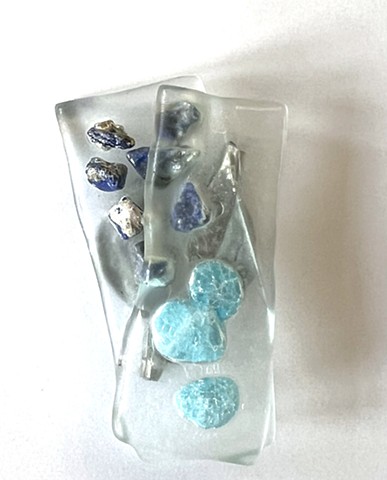


Oya’s early explorations with glass began from a fascination with transparency, light, and transformation. This period also marked her first encounter with glass beads, which she used as colour pigments in melted glass. Using fusion and slumping techniques, she embedded symbolic forms and traditional Turkish motifs, such as the tulip, kilim pattern, and nazar boncuğu (evil eye), within layers of molten glass. The heat process created fine cracks and textures on the surface, reminiscent of batik or aged ceramic glaze. These subtle fissures evoke the spirit of Wabi-Sabi, the Japanese aesthetic that finds beauty in imperfection and transience. Each crack becomes a quiet trace of transformation, a reminder that fragility and flaw can deepen, rather than diminish, a work’s expressive power. These early pieces merge craft with experimentation, laying the foundation for her enduring interest in how material tension and imperfection can give rise to poetic beauty.